Overflowing gutter cleaning
Leaves, seed pods, roof grit, and compacted mud can narrow a gutter channel until a mild shower sends water over the face. Overflow near a doorway or window is especially easy to notice, but it does not tell the whole story: a stopped outlet, a low section, or an undersized downspout can create the same symptom.
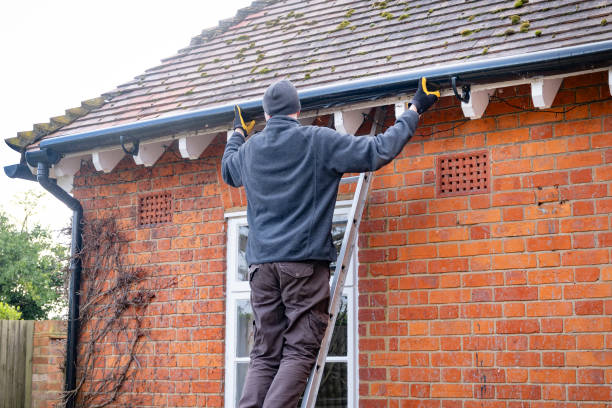
A local contractor may remove debris by hand or with appropriate equipment, flush outlets where conditions allow, and look for sagging brackets or obstructed elbows. Ask how debris is collected, whether exterior cleanup is included, and how the professional protects landscaping, siding, and roof edges while working.
Cleaning frequency depends on tree cover, roof pitch, gutter guards, surrounding vegetation, and recent storms. A careful estimate should distinguish a simple accessible run from multistory work, steep slopes, brittle old components, and downspouts that need separate clearing.
Ask what the visit includes before agreeing to work.
New gutter installation
A new system should move roof runoff away from foundations, walkways, entrances, and vulnerable landscaping. That outcome depends on correct sizing and placement, not just attaching a straight line of metal beneath the roof. The roof surface, drainage path, fascia strength, and discharge destination all matter.
Installers commonly evaluate the total roof area feeding each run, locate practical downspout exits, establish a workable pitch, and select suitable hangers and sealant details. Ask for a clear description of material, gauge, attachment method, expansion allowances, corners, and how the work interfaces with drip edge or existing flashing.
An installation proposal should separate removal and disposal, new gutter lengths, corners, outlets, downspouts, extensions, and any rotten fascia repair. A contractor should explain the limits of the installation, including drainage conditions on the ground that may require a different trade.
Ask what the visit includes before agreeing to work.
Leaks, seams, and gutter repair
A drip at the end cap, a wet wall behind the gutter, or a joint that opens after a freeze is often repairable, but sometimes indicates broader movement. Repeated patching can hide a loose hanger, improper slope, or deformation that will simply open the seam again.
Repair evaluation may include a visual inspection of seams, rivets, end caps, outlet penetrations, corroded segments, and the surface behind the gutter. The best repair method depends on the material and the condition of the underlying metal; a sealant bead is not a substitute for securing failed supports.
Ask whether the contractor recommends sealing, refastening, replacing a damaged section, or replacing the whole run, and why. Request a distinction between a temporary water-control measure and a durable correction, especially when rainfall is already entering a building.
Ask what the visit includes before agreeing to work.
Guards and debris-control options
Screens, perforated covers, and fine-mesh gutter guards can reduce the amount of larger debris that enters a channel. They do not make the roof edge maintenance-free: surface buildup, roof granules, pine needles, and inaccessible downspout bends still deserve attention.
A qualified installer should compare guard compatibility with your existing gutter profile and roof edge, discuss fastening without disturbing roofing details, and consider how heavy rainfall will pass across the cover. Different materials and roof conditions can change the right choice significantly.
Get a candid explanation of cleaning access, service limitations, and how the proposed product handles the kind of debris you actually see. Be wary of universal claims that one guard eliminates all cleaning or prevents every possible overflow.
Ask what the visit includes before agreeing to work.
Gutter replacement and fascia concerns
Rust-through, repeated seam failure, crushed sections, and extensive sagging may make replacement more sensible than continued patching. The decision is not purely cosmetic. Water moving behind the existing channel can damage fascia, stain siding, and create a difficult inspection area.
A replacement quote should identify which sections are being removed, what material will be installed, and whether exposed fascia or other woodwork needs a separate assessment. Workers may discover deterioration only after the old system is removed, so the estimate should address how unforeseen repairs would be approved.
Ask how new outlets align with drainage needs and how disposal, fasteners, roof-edge transitions, and cleanup will be handled. If part of the system remains, ask how old and new sections will connect and whether different metals might create compatibility concerns.
Confirm what is included in the estimate and whether any additional services require separate approval.
Seamless gutter fabrication
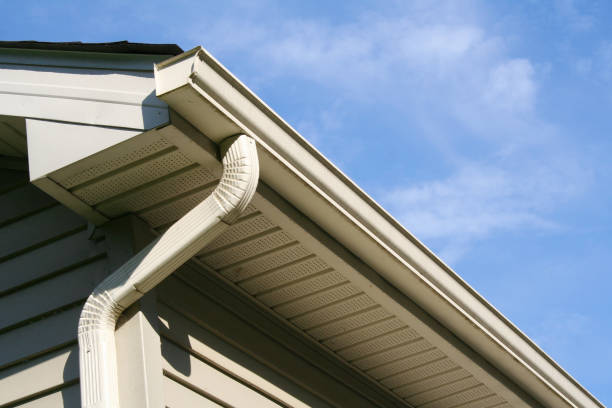
Seamless gutters are typically formed on site in long continuous runs to reduce intermediate joints. They still need end caps, corners, outlets, and connections, and those locations can leak if installed poorly. The term seamless does not mean a completely joint-free drainage system.
The installer should measure each roof edge carefully, check access for forming equipment, and use suitable supports to maintain alignment along long spans. Temperature movement, profile depth, metal thickness, and downspout locations all affect the finished run.
Compare bids using actual material specifications and the included accessories rather than the word seamless alone. Ask how crews handle complex corners, unusually long rooflines, and runoff concentrated where two roof planes meet.
Ask what the visit includes before agreeing to work.
Downspout blockage and repair
An overflowing outlet or water spilling from a downspout joint can be caused by packed leaves, disconnected elbows, a crushed vertical section, or a blocked underground line. A clear gutter trough does little good when the discharge path below it cannot carry water away.
A contractor may examine visible bends, straps, connections, outlets, and splash areas before deciding whether to clear, straighten, reconnect, or replace parts. Underground drainage can require separate investigation and may not be included in standard gutter service.
Ask where the water will end up when the repair is complete. A downspout that drains directly beside a basement wall can remain a moisture problem even after every elbow is open and firmly attached.
Ask what the visit includes before agreeing to work.
Downspout installation and redirection
Additional downspouts can relieve an overloaded gutter run where the roof collects a large volume of runoff. The goal is to create enough paths for water to leave the channel while placing discharge where it will not erode soil or create slip hazards.
Installation often includes selecting outlet points, configuring elbows to clear trim, anchoring straps without damaging exterior materials, and determining where extensions or splash blocks may be useful. Local drainage rules, property slopes, and walkways may limit discharge options.
Review the plan on site before authorizing work. Ask whether the quote includes extensions, decorative finishes, buried piping, or any excavation; those are not automatically part of attaching a vertical downspout to a wall.
Confirm what is included in the estimate and whether any additional services require separate approval.
Routine inspections and maintenance
Minor problems are easiest to address before repeated overflow softens fascia or leaves standing water along the foundation. A maintenance visit can combine cleaning with a check for loose hangers, deteriorated seals, poor drainage, bent outlets, and early corrosion.
Inspection scope varies. Some professionals check the system from ladders or the ground and document visible conditions; others may offer additional roofline access where it can be done safely. Ask what is inspected, whether photos are supplied, and what cannot be seen without further work.
Maintenance timing should be based on local tree cover, recent storms, roof materials, and known problem spots rather than an automatic claim that every home requires the same schedule. Record the location of recurring issues for the next visit.
Ask what the visit includes before agreeing to work.
How to separate a drainage problem from a cosmetic problem
Surface stains, uneven color, and dents may affect appearance without immediately interrupting water flow. Standing water, on the other hand, can point to inadequate pitch, a blocked outlet, or deformed supports. A contractor should identify whether the complaint is about appearance, capacity, leaks, fastening, or the discharge location. It may be possible to correct one part without replacing the entire system, but that depends on condition and compatibility.
The roof is part of the drainage system, too. Water arriving from valleys, upper downspouts, and large roof sections can concentrate at one point. A gutter that looks large enough along a short section may not be sized properly for the amount of water reaching it. Ask how the professional evaluated the contributing roof area, the number of outlets, and the path water takes after it leaves the downspout.
In a sudden storm, keep the immediate priority on safety. Avoid standing beneath visibly loose metal, handling energized exterior wiring, or trying to clear a high outlet from an unstable ladder. If water is entering living space, protect belongings when safe and consider whether building-envelope, roofing, water mitigation, or electrical assistance is also needed. A gutter referral may solve one source of runoff but cannot replace every other emergency service.
Good workmanship often includes small decisions customers do not see in a photo: choosing fasteners that fit the substrate, maintaining a consistent slope, preventing incompatible-metal contact, keeping seals clean and dry before application, and allowing water to discharge away from areas where it can return to the structure. These details are worth discussing because a low initial estimate may omit the part that makes the work last.
Ask how the crew will clean up metal offcuts, removed debris, packaging, and old sections. Discuss access to water or power if equipment requires it, the placement of vehicles, and whether anyone needs to move outdoor furniture. A few minutes of practical planning can prevent delays and provide a clearer understanding of the final invoice.